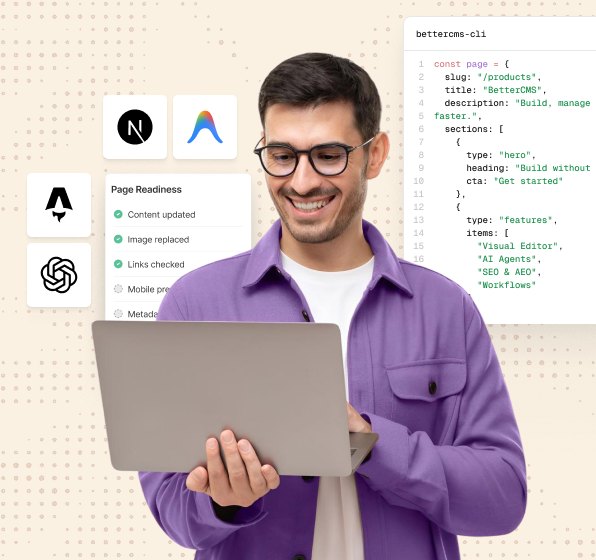
You define what can change

Model the content in the schema builder and serve it over the API. Marketing edits the rendered page inside the model you wrote.

Developer working at a laptop, with a page readiness list and a schema file over it

Built to be programmed

  • Schema builder

    Model pages, collections and blocks and see the JSON as you go. The API updates with the model.

  • API and SDKs

    REST, GraphQL and typed clients for the languages you use. Your rendering layer stays your own.

  • MCP server and CLI

    Point an AI assistant at your content over MCP. Run the same operations from your terminal.

  • Roles and audit logs

    Decide who edits copy, who moves sections and who publishes. Every change is recorded with a name and a time.

  • Migrate what already exists

    Move a site over with the migrator and keep the URLs. Webhooks and API keys connect the rest of your stack.

Your stack. Your rules. Everyone moves faster.

Build

Build experiences without slowing down your team

Create structured content and production-ready pages without waiting on developers for every update.

  • Build pages visually with the Visual Editor
  • Model content with flexible schemas
  • Reuse components across your site
  • Preview changes before they go live
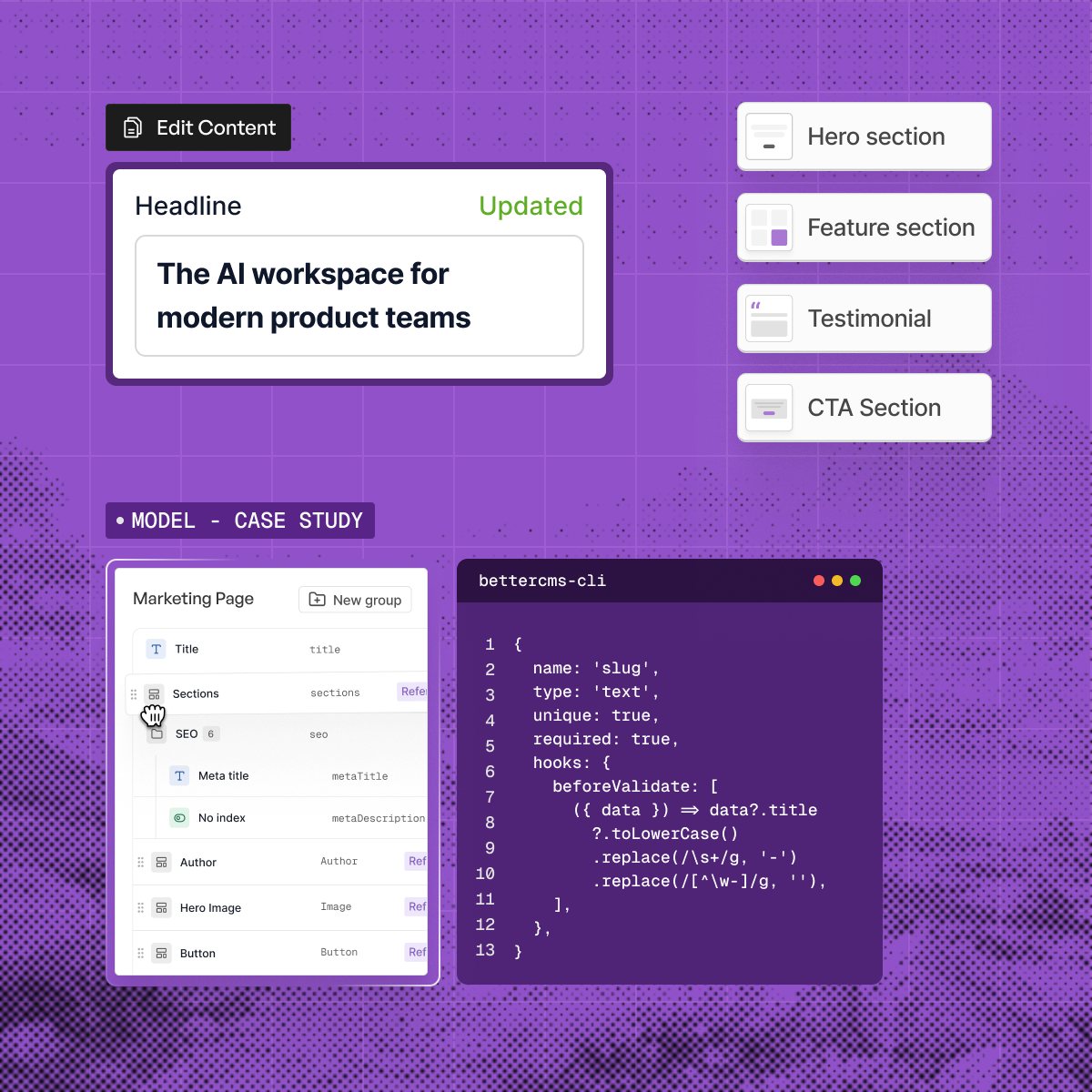
The BetterCMS editor with a headline field updated, a section list and a content model beside a CLI window

AI Agent

Put AI to work across your content workflow

Connect your CMS to the AI tools you already use and let agents handle repetitive content work.

  • Generate content with built-in AI
  • Manage workflows through natural language
  • Connect Claude, ChatGPT, and Cursor through MCP
  • Deploy AI agents for repetitive CMS tasks
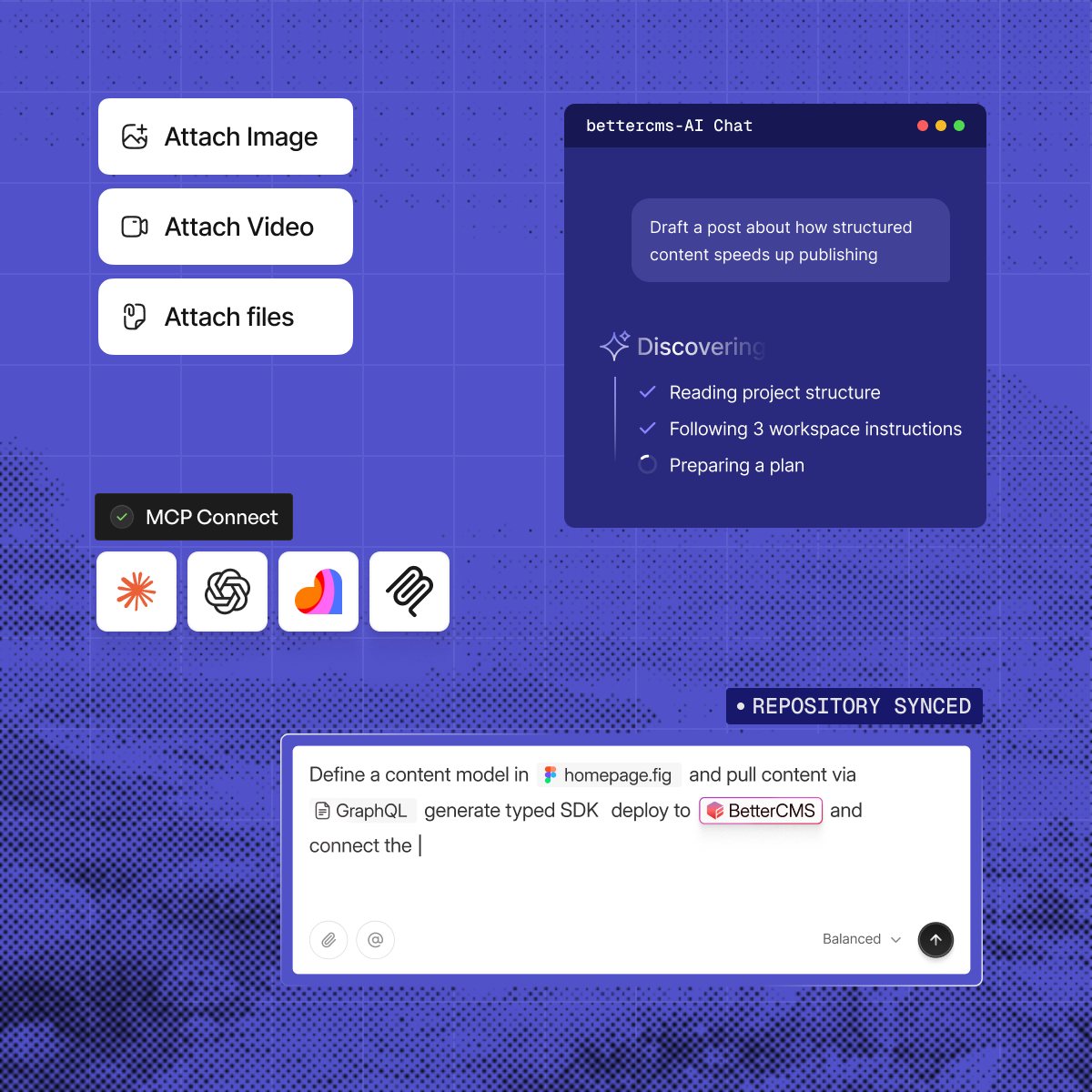
An AI chat panel reading a project and planning work, with MCP connections to four assistants

Optimize

Make every page ready for search and AI

Go beyond traditional SEO. BetterCMS gives your team the tools to make content discoverable across search.

  • Manage metadata and structured data
  • Build schema without touching code
  • Optimize content for AI search and AEO
  • Manage redirects, sitemaps, and canonicals
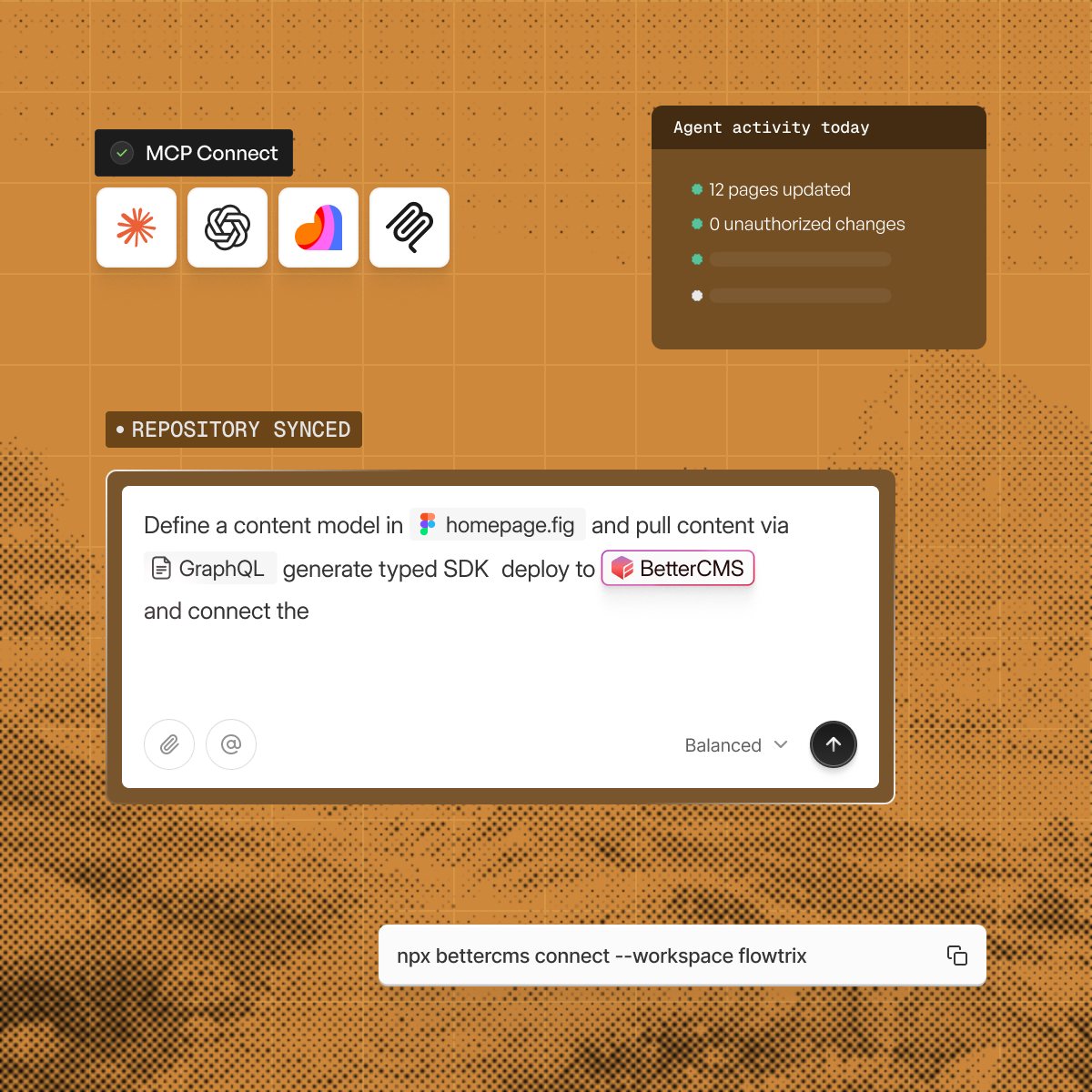
MCP connections to four assistants beside an agent activity card and a prompt that defines a content model

Scale

Ship faster as your content ecosystem grows

Give marketing and content teams the freedom to move fast while keeping developers in control of the stack.

  • Create and update pages without engineering bottlenecks
  • Manage permissions and workflows at scale
  • Connect your existing frontend and tools
  • Publish across multiple experiences from one CMS
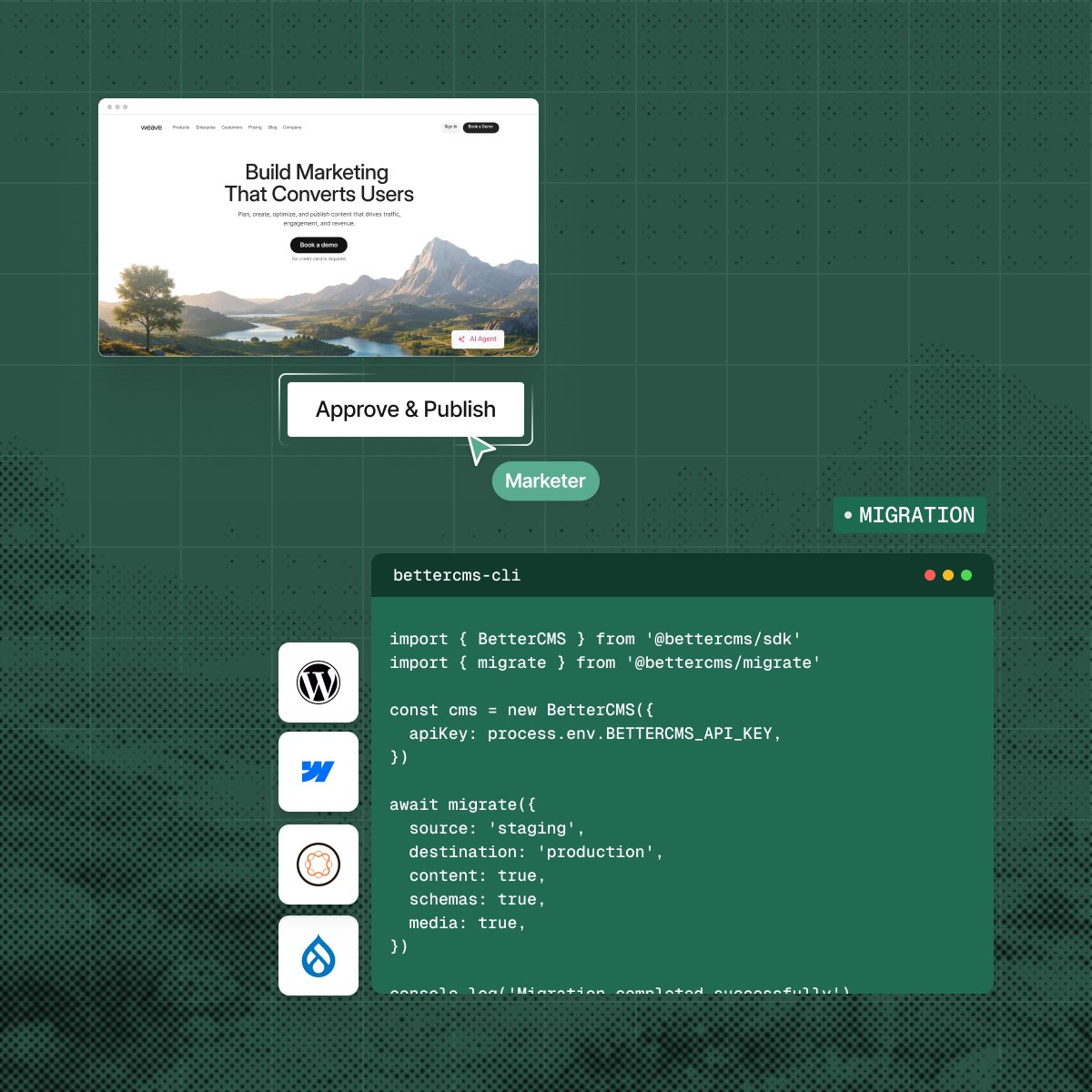
A page waiting for approval beside a migration script that moves content from staging to production

The practical questions.

What teams usually want to know before changing the way they operate their website.

  • No. You keep the framework. The API delivers published content and your code renders it, so the page is still yours.

  • Yes. They come from your own content model, so the shape your code expects is the shape the model defines.

  • What the model lets them: the values a field holds and the order of the sections you registered. Not the structure around them.

  • Both. The MCP server gives an assistant twenty tools for reading content and writing drafts, and the highest thing it can do is request a publish.

Bring your own framework

Book a technical walkthrough and bring the content model you are working from.